
The McKinney Method: How to Weaponize AI + Human Insight to Steal Attention in 3 Seconds
Have you ever been scrolling through your feed, finger hovering on autopilot, when a video suddenly stops you cold? Maybe it wasn’t flashy or even particularly well-produced, but something about it felt impossibly specific. It was as if it knew exactly what you were feeling, what you cared about, or what you were secretly struggling with. That sensation, the content that feels like it’s speaking directly to your soul, isn’t a coincidence. It’s deliberate. And in many cases, it’s the result of a strategy that mirrors what McKinney has quietly perfected behind closed agency doors.
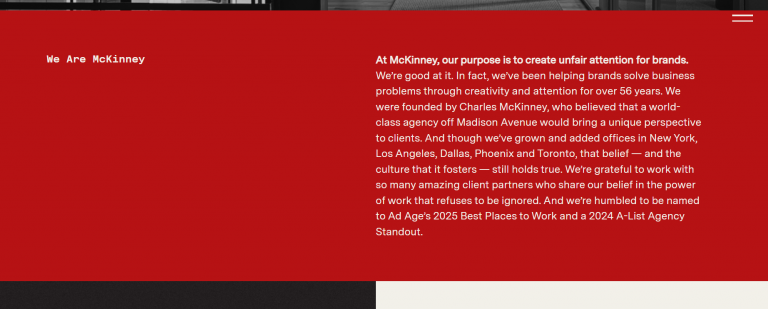
McKinney isn’t the kind of agency that dominates headlines. They aren’t the ones flaunting award wins or grandstanding on industry panels. But their campaigns consistently outperform expectations and capture audience attention with surgical precision. This is not accidental. McKinney has developed a formula that merges machine-driven cultural analysis with human emotional intelligence. At the core of that formula is their proprietary system, BrandAI. This tool functions like a high-speed digital brain that scans behavior, tone, language, and cultural shifts in real time. When those insights land in the hands of emotionally attuned creatives, the result is content that feels eerily timely, personal, and irresistible. McKinney doesn’t wait for trends to become obvious. They spot them before they break the surface.
In this breakdown, you will get a full, uncensored look at how it works. Specifically, you’ll discover:
- The true mechanics behind McKinney’s strategy. Not the polished version found in agency portfolios, but the real process that fuels their campaigns and earns them disproportionate results.
- What BrandAI actually does behind the scenes. You’ll learn what kinds of data it processes, how it interprets cultural shifts, and how it directly influences creative output.
- How to build your own version of this strategy, even without their resources. Whether you’re a small business owner or a content creator, you’ll walk away with a clear, actionable method for making content that lands with the same emotional precision.
This is not about theory. This is about reverse-engineering a proven strategy so you can use it for yourself, starting today.
The Core of McKinney’s Strategy: Merge AI with Human Storytelling
McKinney’s most powerful advantage, what we’re calling their secret trick, is the way they have redefined what advertising actually is. For them, advertising is not a campaign, a graphic, or a slogan. It is a living cultural response that evolves as quickly as the audience’s emotional state. While most businesses are still locked in static marketing cycles, building campaigns on quarterly calendars, McKinney operates in real time. Their creative decisions are powered by a unique internal system called BrandAI, and that is where the real strategy begins.
So what exactly is BrandAI?
At its core, BrandAI is a proprietary platform built to scan and decode culture as it happens. It analyzes the emotional temperature of conversations happening across social platforms, media outlets, and communities. The platform tracks shifts in sentiment, rising visual trends, patterns in tone of voice, and emerging social behaviors. It is constantly watching for what the audience is feeling and how those feelings are changing day by day, even hour by hour.
Imagine it as a multi-layered intelligence engine. It fuses together the power of:
- Social listening tools, which monitor how people talk about products, problems, and culture in real time
- Competitor analysis, to understand how other brands are positioning themselves and what gaps exist in the conversation
- Audience psychographics, to tap into underlying motivations, identities, values, and insecurities
- Linguistic tone modeling, which breaks down how specific words, phrases, or visual cues trigger emotional reactions
Together, these components allow McKinney to detect not only what people are saying, but how and why they are saying it. The platform acts like a cultural radar system, identifying subtle but powerful shifts in audience mood before most competitors even realize the conversation has moved.
But BrandAI by itself does not create ads. The platform is only half the equation. What makes the McKinney method so effective is what happens next.
Once the data is harvested, their creative teams, including writers, strategists, designers, and content architects, take over. They enter what McKinney calls emotion-driven creative sprints. These are rapid, highly collaborative sessions where human storytellers interpret the raw intelligence and shape it into something deeply compelling. They are not just producing assets. They are translating emotional data into hooks, headlines, visuals, and story arcs designed to resonate at an almost instinctual level.
The result is content that hits fast and cuts deep. It is not built to explain or sell. It is built to connect, instantly. That is the real secret. McKinney has built a closed feedback loop between cultural data and human creativity, and they run it faster than nearly anyone else in the game.
What BrandAI Actually Does Behind the Scenes
Let’s peel back the curtain and walk through what McKinney’s process really looks like in motion. This is not a vague brainstorming session or a team looking at trend reports once a quarter. This is a live, responsive workflow where emotional data moves directly into creative execution. It moves fast, and it moves with intention.
Picture this: McKinney takes on a new campaign for a fitness brand that wants to connect deeply with millennial women. The client is not asking to just look inspiring or modern. They want to create a real emotional connection. They want the audience to feel seen.
So what does McKinney do first? They activate BrandAI.
The system begins scanning digital behavior across multiple platforms. Within minutes, it picks up an unusual increase in TikTok content that focuses on the idea of “burnout from gym culture.” It notices videos that question toxic motivation, aggressive fitness routines, and the pressure to perform physically just to be considered healthy. But BrandAI does not stop at hashtags or trending audio. It dives into the comments, pulling emotional language directly from viewers. The tone is shifting. Instead of celebrating hustle, people are expressing the need to slow down, protect their peace, and embrace a softer relationship with their bodies.
At the same time, the system picks up Reddit threads filled with personal stories about workout anxiety and fatigue from trying to live up to social media’s version of wellness. Instagram reels are showing creators doing yoga in pajamas, skipping the gym entirely, and still using captions like “healing movement” or “progress without pressure.”
This is not just a content shift. It is a tone shift.
BrandAI collects this data, analyzes the language, the visuals, the pacing, and the sentiment behind every interaction. Then, it translates that into something creative teams can act on immediately.
Within just a few hours, McKinney’s team receives a cultural intelligence pack. This is more than a trend report. It is a roadmap for emotional alignment. Inside that pack is:
- A cultural pulse report that maps where these conversations are gaining the most traction and among which demographic clusters
- A collection of real-time language samples pulled straight from social platforms, highlighting specific phrases, emotional keywords, and user-generated content examples
- A mood and tone breakdown that shows whether the overall emotional energy is growing more hopeful, frustrated, defiant, or tender
- A curated set of hook suggestions and messaging angles designed to mirror the emotional state of the audience without sounding forced or overly promotional
Now the creative sprint begins. The team has a clear emotional blueprint to work from. They are not guessing. They know exactly how the audience feels, what they are sensitive to, and what kind of messages will feel safe, supportive, and aligned.
Instead of producing a campaign about pushing limits or reaching peak performance, they begin scripting short-form content that sounds like an inner monologue. Lines like “You don’t have to crush it every day” or “Strong does not always look loud” make it into early concepts. These messages are built to soothe, not sell. The content is not just persuasive. It is empathetic.
The visuals follow the same logic. They avoid dramatic cuts and high-energy music. Instead, they feature natural lighting, calming movements, and faces that feel familiar. There is no voiceover from a booming narrator. There is no pressure. Just a gentle message that says, “We see you. You are not failing. You are changing.”
And this is the key moment.
When the audience sees this content, it does not feel like an ad. It feels like emotional timing. It feels like the brand understands them better than the competition ever could. That is not a coincidence. It is the result of a process that starts with intelligence and ends with intentional, emotion-centered storytelling.
This is how BrandAI works behind the scenes. It does not create ads. It creates emotional context. McKinney’s teams simply deliver messages that feel as if they were already part of the viewer’s inner world.
How Small Businesses and Content Creators Can Replicate This
You might not have access to McKinney’s proprietary BrandAI system, but that does not mean the strategy is out of reach. You do not need a million-dollar tech stack or a full creative department to put this into practice. What you need is a process that captures the core of what BrandAI delivers. That core is cultural listening, emotional awareness, and fast, relevant content execution.
The goal is not to copy McKinney’s technology. The goal is to apply their mindset. By observing what people are feeling in real time, aligning your messaging with those emotions, and producing content that responds to the current moment, you can build a system that works just as effectively. Whether you are a solo content creator or a small business owner, the steps below will guide you through how to build your own version of this strategy using tools that are already available to you.
Step 1: Scan for Emotional Patterns in Culture (Your DIY BrandAI)
McKinney’s biggest advantage begins with what they hear. Before any script is written or visual is created, they are listening. They are not just listening for trends or hot topics. They are listening for emotion. That is your starting point too.
You do not need a proprietary AI tool to do this. You just need to develop the habit of scanning the emotional energy of your audience. That means going beyond what people are talking about and learning to identify how they are feeling underneath the conversation.
Start by using free or low-cost tools. These platforms are already giving you emotional data. You just have to know where to look.
Tools you can use:
- TikTok Search and Comments
Type in a keyword from your niche and filter by “this week” or “most liked.” Do not just watch the top videos. Read the comments. These are pure emotional responses, often unfiltered. Look for repeated words, emojis, tones, and shared frustrations or affirmations. - Google Trends
Enter terms related to your product, service, or niche. Pay attention to rising queries, not just the most searched ones. Rising queries show emerging concerns or curiosities that might be gaining emotional weight. - Reddit (Subreddits in Your Niche)
This is where people go when they want to be honest. Look at threads in subreddits that reflect your audience’s world. What complaints keep surfacing? What questions are asked repeatedly? Are there emotional phrases like “I’m sick of…” or “why does no one talk about…”? - X
Use advanced search to combine emotional keywords with your niche. Try searches like “exhausted marketing,” “overwhelmed content creation,” or “tired of gym culture.” Look for tone, sarcasm, frustration, or quiet calls for help masked as memes or jokes.
This is not a data dump. It is a tone audit. The most powerful question you can ask during this step is:
“What emotional undercurrent is my audience feeling this week that nobody is saying out loud?”
Once you start noticing that undercurrent, document it. Do not just capture topics like “Instagram algorithm” or “low sales.” Note the tone behind them. Are people feeling burned out, annoyed, insecure, ashamed, hopeful, inspired? That emotional layer is what drives scroll-stopping content.
Do this scan weekly. It takes less time than you think and gives you a live feed of what your audience actually cares about in this moment. This becomes your foundation for everything that follows.
Step 2: Identify a 3-Second Hook Angle
McKinney’s creatives understand a critical truth about modern attention spans. You do not have eight seconds to make an impression. You have three. Those first three seconds are the gateway. They determine whether someone stops to engage or scrolls right past your content without a second thought.
That is why McKinney builds their content around openings that demand attention. These openings are never random. They are designed to create friction, connect emotionally, and build tension. The best content starts with a moment that feels too personal, too interesting, or too uncomfortable to ignore.
Here is how they do it:
- Interrupt the pattern
Start with something unexpected. This could be an unusual sound, a jarring visual, a direct question, or a surprising statement. The goal is to break the scroll and create a pause. - Signal emotional relevance right away
Use direct eye contact, first-person storytelling, or confessional language. Make the viewer feel like the content is speaking directly to them, about something they care about. - Create tension that needs resolution
Introduce a contradiction, a mystery, or a truth that challenges what the viewer believes. Tension is what keeps them watching because it creates a need to find out more.
Use this DIY hook formula to start strong:
[Hot Button Word] + [Emotional Angle] + [Your Brand Point of View]
This formula helps you build a hook that grabs attention while staying aligned with your brand. The hot button word taps into a current frustration or curiosity. The emotional angle creates resonance. The brand point of view ensures that the content still supports your message or offering.
Examples of hook angles in action:
- “Why I quit the gym after 10 years”
A relatable narrative for a wellness coach promoting a softer, more sustainable fitness mindset. - “Don’t buy another skincare product until you know this”
A tension-filled opener for a beauty brand challenging the industry’s standard solutions. - “3 lies you’ve been told about making money online”
A strong hook for a business creator aiming to position themselves as a truth-teller in a crowded niche.
Once you have your hook, record it simply. Use your phone. Keep the lighting natural. Speak directly to the camera. You want this to feel like a moment captured in real life, not something produced in a studio. The less it feels like an ad, the more it will connect.
This is how McKinney gets people to stop and pay attention. They do not waste the first few seconds. They use them to speak directly to what the audience is feeling, and they do it fast.
Step 3: Remix with Human Storytelling
Artificial intelligence can tell you what people are talking about. It can even show you what they are feeling. But it cannot create connection. That part still belongs to humans. The real magic of McKinney’s method happens when their creative teams take raw emotional data and shape it into stories that make people feel seen.
This step is about taking everything you have learned from your cultural scan and hook development, and turning it into a message that reflects, validates, and gently shifts how your audience thinks. You are not just responding to what they care about. You are showing them that you care too.
Your message should do three key things:
- Reflect your audience’s values
Show that you understand what matters to them and what they are currently navigating. - Validate their feelings
Speak in a tone that tells them they are not alone, wrong, or behind. Instead, help them feel acknowledged. - Offer a new frame or “aha” moment
This is where you reframe the problem or belief they are carrying and guide them toward a new possibility or insight.
McKinney often uses a story structure that builds empathy while gently steering the audience toward the brand’s message. It looks like this:
- Start with the hook
Open with a pattern interrupt that grabs attention quickly. - Deliver an emotional mirror
Speak directly to where your audience is mentally or emotionally. Use phrases like, “I used to feel like…” or “You’re probably tired of…” - Introduce a reframe or insight
Shift the perspective by offering a new truth or belief. For example, “Maybe it’s not your fault” or “What if the system is broken, not you?” - End with a subtle brand tie-in
Introduce your offer, service, or product in a way that feels like a natural part of the story. This is not a hard pitch. It is a moment of shared solution, like “Here’s what helped me, maybe it can help you too.”
This kind of storytelling does not feel like a campaign. It feels like a conversation. That is exactly the effect you want. People do not engage with content because it is clever. They engage because it sounds like something they would say, or wish someone had said to them.
You are not selling in this step. You are creating the emotional conditions that make someone want to keep listening.
Implementation Blueprint: Bringing It All Together
Now that you have the pieces of McKinney’s method, the key is putting them into motion. You do not need a large team to pull this off. You need a weekly routine that keeps you tuned into your audience and disciplined in how you create.
Use the blueprint below to turn cultural insight into content that connects.
Phase
What to Do
Tool or Prompt
Scan
Set aside 30 minutes each week to check platforms, read comments, and track tone shifts. Look for changes in emotional energy, not just trends.
Ask: “What are five things people are really feeling this week?”
Hook
Write at least five opening lines or video intros based on what you found in your scan. Keep them short, emotional, and direct.
Use the Hook Crafting Template. Test early versions in Reels or Stories to see which ones earn attention.
Create
Build a script, storyboard, or outline. Use the exact language and tone your audience is using right now. Mirror their voice.
Pull phrases from your scan. Keep the structure simple: hook, emotional mirror, reframe, subtle tie-in.
Ship
Publish on short-form platforms first. These channels reward quick emotional connection and are perfect for testing content.
Start with TikTok and Instagram Shorts. Do not overproduce. Authentic visuals work better.
Reflect
Review what landed emotionally. Look at saves, shares, comments, and DMs. These are signs of resonance.
Ask: “Which post got people to reply, not just like?” That is your signal to double down.
This system works best when you run it weekly. Do not wait for campaigns to be perfect. Focus on consistency, emotional clarity, and fast response to what your audience is living through right now.
The more you treat content as a cultural response instead of a sales message, the more trust and attention you will earn. That is the real power behind McKinney’s approach, and now, it can be yours too.
Tools to Simulate BrandAI on a Budget
You do not need access to a proprietary system like BrandAI to start thinking and creating like a top-tier agency. What you need is a simple but strategic toolkit that allows you to replicate the key parts of McKinney’s process. That includes listening to cultural signals, capturing emotional tone, testing ideas quickly, and producing content that feels timely and relevant.
Below is a list of free or low-cost tools that work together to help you create your own lightweight version of BrandAI. These tools are accessible, easy to learn, and powerful when used with intention.
Need
Tool
How to Use It
Trend Spotting
TikTok Search, Exploding Topics, Glimpse
Use these platforms to monitor rising conversations. Look beyond hashtags and focus on emerging emotional language, common phrases, and cultural mood.
Audience Voice Mining
Reddit, YouTube comments, X threads
Read through comment sections and discussion threads in your niche. Identify common frustrations, recurring themes, and emotional expressions that your audience is sharing openly.
Hook Testing
Instagram Stories polls, A/B testing on Reels
Post two versions of a hook or headline to see which one gets more reactions, shares, or responses. This gives you fast feedback before building out full content.
Creative Scripting
ChatGPT using your brand voice and audience inputs
Use this to refine your message. Feed in emotional language from your research and ask for first-person angles or story prompts that reflect your audience’s mindset.
Video Editing
CapCut, InShot, Descript
These tools help you edit short-form content with speed and polish. Focus on keeping it visually simple and emotionally clear, just like McKinney’s low-friction style.
You do not need all of these tools at once. Start with two or three that align with how you currently create content. As your process develops, layer in the rest. The goal is not to mimic technology. The goal is to mimic the behavior that makes the technology effective.
When you build your content based on real emotion, current tone, and fast feedback, you are already working like an agency. This is how small brands create big impact, and how creators build trust that converts.
For Small Businesses: Use This to Own a Niche Narrative
If you are a local brand or service provider, this method gives you a powerful edge. You are close to your community, and that means you can respond faster and more personally than national brands. Instead of running generic promotions, you can reflect the real-time mood, language, and needs of the people around you.
- Use this approach to become more than just a business. Become a cultural voice in your space.
- Run weekly emotional scans to keep your messaging timely and responsive.
- Create lo-fi Reels or TikToks that reflect what your neighborhood or niche is feeling right now.
- Use local references, personal tone, and real situations to build trust.
Speak from experience, not from a script, so your brand feels human and present
When you start showing up with content that mirrors what people are living through, you stop sounding like a business and start sounding like someone who belongs in the conversation.
For Creators: Build a Recognizable Point of View and Format
McKinney’s content works because it feels like it was made by someone who truly understands the audience. That is the same effect you want as a creator. Your goal is not just to make one good video. It is to build a point of view that your audience starts to recognize and trust.
Use this strategy to create structure, consistency, and emotional depth in your content.
- Scan for emotional patterns weekly to stay culturally and emotionally current.
- Turn each insight into a short-form video series that speaks to one specific feeling or shift.
- Let your content build around your point of view, not just trends.
- Use the message behind your hook as a recurring theme your audience can connect with over time.
When your followers start thinking, “They always get how I feel,” that is when you move from content creator to trusted voice.
Final Takeaway: Don’t Just Post — Respond to the Culture
McKinney’s strategy makes one thing clear. Marketing that works is not about volume. It is about timing, emotional clarity, and cultural relevance. The brands that win are not the loudest. They are the ones that show up with the right message, in the right tone, at the right moment.
If you know what your audience is feeling, and you move quickly to meet that feeling with the right story, your content can cut through everything else on the feed.
Whether you are a solo content creator with 800 followers or a small business running a local store, this is your cheat code:
Scan → Feel → Create → Connect
And if you want the full system, complete with worksheets, templates, and creative tools to guide each step, everything is waiting for you inside the member hub.
Memberships
Affiliate Program
Copyright © 2025 Creator Affect