
Go Loud or Go Home: The Saatchi & Saatchi Playbook for Bold Brand Building
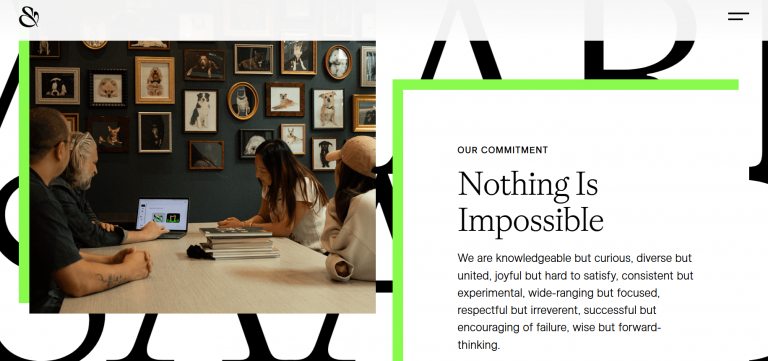
Look at the ads that history remembers. Not the ones that got polite nods, but the ones that made people stop, react, argue, or feel something. Those are the campaigns that etched themselves into culture. More often than not, those campaigns came from Saatchi & Saatchi.
Founded in 1970 by Maurice and Charles Saatchi, the agency didn’t climb the global ranks by following convention. They rose by breaking it. Their mantra was clear: if everyone is whispering, shout. While other agencies fine-tuned polite messaging, Saatchi built its empire on shockwaves. They made boldness a brand value. If the ad didn’t make someone uncomfortable or deeply moved, it wasn’t finished.
They weren’t reckless. They were precise with their punches. Saatchi learned how to weaponize emotion and tension to generate attention that couldn’t be ignored. Their campaigns weren’t just marketing efforts. They were cultural interruptions. The kind that sparked debate, stirred emotion, and most importantly, made people remember the brand.
In this article you’ll discover:
- How Saatchi’s “Go Loud or Go Home” strategy really works.
- Why provoking emotion trumps polite persuasion in saturated markets.
- How small businesses and content creators can borrow this audacious mindset and apply it at their scale.
The Core of Saatchi’s Strategy: Emotion at All Costs
Saatchi & Saatchi never believed that advertising was just about promoting benefits or comparing specs. Their strategy was built on something far more primal: emotion. Not soft sentimentality, but raw, polarizing, memorable feeling. In a world where most brands carefully manage tone and avoid offense, Saatchi went straight for the gut. If a message did not make people flinch, cheer, argue, or lean in, it was not doing enough.
Their question was never “What makes this product better?” It was “What emotional reaction can we provoke that will make this brand unforgettable?” And they were not selective about which feelings to use. Fear. Anger. Pride. Outrage. Triumph. They used the full range of human emotion to make sure their work left a mark that could not be ignored.
One of their most infamous examples is the “Labour Isn’t Working” campaign for the UK Conservative Party. It did not gently suggest change. It accused. It confronted. The headline hit like a punch, and the image of long lines of jobseekers drove it deeper. It was polarizing, loud, and impossible to forget. People argued about it, and that was the point. It moved emotion first and logic second. And it worked.
Saatchi understood that advertising does not need universal approval. It needs impact. While most agencies tried to stay safe, Saatchi used discomfort as a strategy. They did not create chaos for the sake of it. Every shock, every moment of tension was deliberate and purposeful. The result was attention that lasted.
For small businesses and creators today, this idea still applies. You do not need a huge budget to make people feel something. But you do need courage. In a marketplace full of quiet competitors, emotion is the loudest weapon you have. The brands that people remember are never the ones that blended in. They are the ones that dared to feel bigger, say more, and make others feel something real.
Behind the Scenes: How the High-Risk Messaging Takes Shape
What you see on the screen or plastered across a billboard is just the end product. The real work happens behind the scenes, where cultural awareness, psychological insight, and calculated strategy collide. Saatchi’s bold campaigns are not built on impulse. They are built on structure. What looks like raw provocation is actually the result of rigorous creative planning.
First, the team dives deep into the emotional landscape of the audience. They ask what people are already feeling but no one is saying out loud. Then they identify the tension, something just beneath the surface that, if touched correctly, will trigger attention. That tension becomes the foundation of the campaign.
Next, they decide how far they are willing to push. Not all Saatchi work is offensive or controversial, but all of it takes a stand. Each piece of creative is put through a lens: Does it make people feel? Does it cut through noise? If the answer is no, it gets reworked. The goal is never to shock without purpose. The goal is to wake people up.
This is not marketing for the risk averse. It is a discipline that rewards emotional courage and creative aggression. What follows is a breakdown of the steps Saatchi teams use to build their signature high-risk, high-reward campaigns. These are steps that businesses and creators at any level can adapt to their scale.
Step 1: Identify the Emotional Pivot
The first move is not to brainstorm slogans or sketch visuals. It’s to uncover the emotional pressure point. Saatchi doesn’t start with what the brand wants to say. They start with what the audience is already feeling, especially the emotions that are unspoken or repressed.
This isn’t surface-level demographic targeting. It’s cultural x-ray work. Strategists dig beneath buying habits and behavioral data to uncover the emotional currents driving those actions. Are people feeling ignored by traditional power structures? Are they fed up with empty promises? Are they searching for meaning in a noisy, disconnected world?
One campaign might be built around frustration with stale choices in a category. Another could tap into a deep cultural exhaustion with fake positivity. It could be desire, shame, pride, defiance, or a sense of being left out. Saatchi looks for the moment when that emotion hits a tipping point. That’s where the pivot lives.
The emotional pivot is the place where the audience says, “Finally, someone said it.” Once that moment is identified, everything else flows from it.
Step 2: Choose a Style That Punctures the Noise
Once the emotional pivot is locked in, Saatchi makes its next aggressive move: deciding how the message should feel and look. This is not decoration. It is amplification. Every visual element, every word, and every tonal decision must reinforce the emotional truth uncovered in Step 1.
This is where Saatchi’s work starts to feel different from the rest. They don’t just design for attention. They design for impact. They ask: What kind of visual or verbal punch would make someone stop mid-scroll or turn their head at a street corner? What type of language carries the weight of the emotion we want to provoke?
The style is often severe on purpose. It might use jarring imagery, confrontational headlines, or visuals that intentionally contrast what audiences expect. Sometimes the copy feels too blunt. Sometimes the tone leans into discomfort. That is all intentional. Saatchi wants the viewer to feel something intense before they even process what they’re looking at.
This is also where campaigns get labeled as “borderline offensive.” Not because they are reckless, but because they are willing to violate the norms of polite, predictable advertising. That calculated severity is what creates attention in a world that filters out the safe and forgettable.
Step 3: Manage the Risk with Precision
Saatchi & Saatchi may be known for boldness, but they are not careless. Behind every sharp headline or confrontational visual is a layer of strategy focused on managing the potential fallout. They know that provocation comes with consequences, and they prepare for them in advance.
This is where the myth of chaos gives way to control. Every bold campaign is stress-tested before it launches. Internal reviews dissect the message: Is this crossing a moral or cultural boundary? Could it alienate core customers? Will it invite backlash, and if so, how will the brand respond?
Saatchi teams study previous campaigns, analyze reactions, and adjust based on real cultural context. What worked for one demographic might not land for another. What sparked conversation in one country might trigger offense in a different market. They calibrate tone with care.
It’s not about watering down the message. It’s about knowing exactly how far to push and being ready for the pushback. That’s what makes their campaigns both memorable and manageable. They’re not swinging wildly. They’re landing calculated hits.
Step 4: Launch to Trigger Conversation, Not Just Reach
Saatchi doesn’t just release a campaign. They release a spark. The goal is not to be liked quietly. The goal is to be discussed loudly. For them, the true success of a bold message is not the immediate applause. It’s the ripple effect.
Their campaigns are launched with timing, placement, and context in mind. They often go live where debates are already happening: in public spaces, on social media, during cultural moments. The strategy is to hit when the audience is already primed to feel something.
What happens next is by design. Screenshots get shared. Influencers weigh in. Articles are written. Memes get created. The campaign becomes a conversation topic, and that conversation becomes free amplification. Even critics help carry the message further. That’s part of the power. The brand becomes unforgettable because it becomes part of the emotional noise people are already sorting through.
For Saatchi, a little controversy is not a problem. It’s a sign that the message landed hard enough to matter. Their goal is not universal approval. It’s maximum emotional engagement. That is what converts attention into memory, and memory into brand power.
How Small Businesses & Content Creators Can Adopt the Loud Mindset
You might think “I’m too small” or “I don’t have the budget for that kind of risk.” But the truth is, you don’t need big budgets to play bold. You need bold thinking.
Saatchi’s approach isn’t reserved for global brands. It’s built on principles that anyone can apply: emotional clarity, calculated risk, and creative bravery. Whether you’re running a neighborhood café or building a personal brand on social media, you have the same tools such as voice, visuals, and audience insight. What matters is how sharply and confidently you use them.
Here’s how to make the loud mindset work on your scale:
Step 1: Select One Emotionally Charged Idea
Start with emotion, not features. Your audience may say they want a product, but what they really seek is a feeling. That is the core of Saatchi’s playbook. You are not selling the thing,you are selling what the thing makes them feel.
Let’s say you run a local café. You are not just offering coffee. You are offering a moment of peace before the chaos of the day. Your bold idea becomes, “This isn’t just coffee. It’s your escape from the grind.” That single emotional pivot takes your message from generic to resonant.
Pick one feeling. Make it sharp. Make it specific. Then build everything around that emotional truth.
Step 2: Frame the Message in Contrast
Great messaging doesn’t exist in a vacuum. It gains power when placed against something dull or expected. Saatchi used contrast like a spotlight, making their bold idea stand out by showing how boring everything else is.
If every café around you is offering “fresh coffee,” that’s your opening. You don’t sell coffee. You sell rebellion against the routine. Your message becomes, “Coffee that defies the grind,” or “Made for people who hate the ordinary.”
This contrast transforms your offer into a statement. It’s not just descriptive. It’s emotional. And it invites your audience to choose a side.
Step 3: Use Visuals and Words That Break Pattern
Your audience is bombarded with content every second. To get noticed, you need to interrupt their pattern. Saatchi mastered this by using visuals and words that did not blend in. They stood out, sharply and deliberately.
Let’s say your brand message is about rebellion from routine. Your video might open with a gray-toned office scene. Someone slams their laptop shut, stands up, and walks out. Cut to vibrant visuals of your café, full of warmth and life. Overlay text reads, “Don’t just escape. Revolt.”
This is not about shock value for the sake of it. It is about visual and verbal cues that create tension and resolution. Your message must carry energy and edge. Make it feel like a signal, not background noise.
Step 4: Accept the Risk
Boldness always carries risk. Saatchi knew this and embraced it. When you speak with clarity and edge, some people will disagree. That is not a flaw. It is a filter.
You may alienate customers who just want a quiet, forgettable experience. That is okay. You are choosing emotional depth over broad, bland appeal. You are making a statement, not just a sale.
Saatchi believed it was better to have a smaller group who felt something than a large group who felt nothing. The goal is not to be liked by everyone. It is to be remembered by the right people.
Step 5: Amplify Where It Matters
Once your bold message is clear, do not just post it anywhere. Post it where it actually matters. Saatchi did not just create campaigns. They placed them with precision.
Think about where your audience naturally spends time. That could be Instagram Stories, a local bulletin board, niche forums, or even a community event. Share your message in spaces where it can gain traction with people who already feel connected to the emotion you are tapping into.
Boldness travels best among the aligned. When people see a message that reflects what they believe or feel but have not said out loud, they amplify it. They talk about it. They stay loyal to the brand that had the courage to say it first.
For Content Creators, the Same Logic Applies.
This mindset is not just for businesses. If you are a content creator, your edge is emotional precision. Pick the emotion your audience already feels but may not have words for. Maybe your DIY audience is sick of gimmicks, trends, or quick hacks that never work. That frustration is your in.
Your bold message could be: “Forget What They Tell You. Build Something That Lasts.” Now wrap that message in content that reflects your stance. Use thumbnails that provoke. Choose titles like “Why Every DIY Guru Is Wrong About This.” Let your tone carry clarity and confidence. Be the voice that rebels against the noise, challenges the norms, and earns attention through truth.
Implementation Blueprint
Adopting the Saatchi method means deciding not to fade into the noise. It is not just about being louder. It is about being more emotionally specific, more visually commanding, and more committed to a point of view. Whether you are a small business or a creator, your goal is to dominate the space where emotion meets relevance. You do this not by trying to reach everyone, but by becoming unforgettable to the right ones.
For Small Businesses: What to Dominate
- Dominate a voice that others will not dare. Pick a stance that your competitors are too polite or too safe to say. If others promote “eco-friendly cleaning,” maybe your message is “Toxins Are Still in Your Cabinet. Let’s Burn the Lies.” Make your tone match the truth your audience already feels but has not heard out loud.
- Dominate one content format and emotional angle. Repetition is memory’s best friend. Maybe you commit to weekly raw customer stories on Instagram, each one spotlighting how your brand helped someone break routine, gain confidence, or stand up to something. Do not spread thin. Go deep with one emotion and one format.
- Dominate community talk. Your bold message should not stop at the screen or ad. Turn it into part of how your business interacts in the real world. Feature customer reactions in your window, repost strong opinions on social media, or spark local conversation with bold signage or events that make people respond.
For Content Creators: What to Dominate
- Dominate your niche by owning the emotional tone. If your followers are exhausted by fake advice, be the creator who calls it out. Be the one who says, “You have been lied to,” and then backs it up. Let your content reflect the exact emotion people are feeling, sharpened with your voice.
- Dominate your visual identity. Saatchi did not go halfway on visuals, and neither should you. Pick a color scheme, title format, intro sequence, or style of delivery that viewers immediately associate with your message. Visuals should not just match your tone. They should reinforce it.
- Dominate engagement by inviting conflict or opinion. Do not be afraid to poke the edges of a conversation. Ask your followers to weigh in. Make videos or posts with strong stances like “Why this trend is making you broke” or “What influencers will not admit.” Conflict attracts attention. Dialogue builds loyalty.
The real win is not just attention. It is emotional ownership. If your audience sees you as the one who finally said what they were thinking, they will remember you, return to you, and share your message even when you are not in the room.
Final Takeaway: Why Going Loud Works
Saatchi & Saatchi’s legacy is not just a collection of iconic ads. It is a mindset, a belief that safe campaigns are forgettable, but boldness creates emotional fingerprints that last. Their “Go Loud or Go Home” philosophy was never about shock value. It was about using emotion as a strategic weapon. Fear, pride, outrage, and joy were not afterthoughts. They were the fuel. Saatchi did not just tell you what a product did. They made you feel something that stayed with you long after the ad ended.
This approach is not limited to global brands or political campaigns. If you are a small business owner or a content creator, you can apply the same principles. You do not need a million-dollar budget to make someone feel. What you need is clarity, courage, and the willingness to speak a truth that others avoid. Say the thing everyone else is dancing around. Show your audience that your brand is not afraid to take a stance. People do not remember neutral. They remember the bold.
So ask yourself this: Are you whispering in a sea of noise, hoping to be noticed? Or are you ready to raise your voice and lead with conviction? The market does not need more polite brands. It needs voices that stir emotion, spark conversations, and demand to be remembered. Go loud or be forgotten. The choice is yours.
Memberships
Affiliate Program
Copyright © 2025 Creator Affect