
Anomaly’s Entrepreneurial Creative Model: Solve, Don’t Just Sell
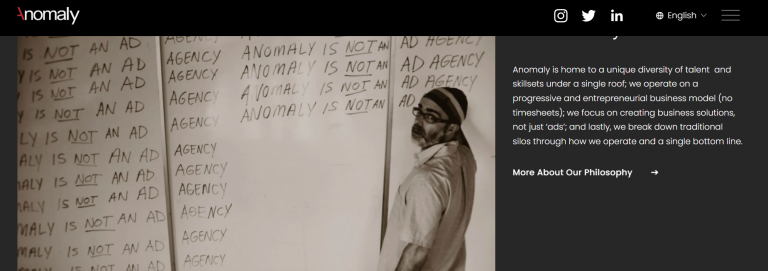
When most agencies receive a brief, they ask: “What can we say about this product or service?” Anomaly takes a sharper route. They challenge the brief before they accept it. Their first question is never about advertising. It is about solving. They believe that real creativity does not begin with a tagline. It begins with a problem. Not just any problem, but the business problem, the audience problem, or the cultural problem hiding under the surface.
Anomaly is not a typical ad shop. They operate more like a hybrid of consultancy, startup studio, and creative lab. They partner with brands in a way that feels more like co-founding than commissioning. Instead of asking how to push a product to market, they ask what people are struggling with that the brand could solve. That shift gives them a clear edge. Their work does not begin with a campaign. It begins with a valuable solution.
In this article, you’ll discover:
- How Anomaly builds business-first campaigns by solving problems before selling products.
- Why creators and small businesses can compete by thinking like entrepreneurs, not advertisers.
- The exact blueprint to adopt the “Solve, Don’t Just Sell” model in your own marketing.
The Core of Anomaly’s Strategy: Solve First, Sell Later
Anomaly does not operate like a traditional ad agency, and they are proud of it. At the core of their strategy is a blunt truth most brands avoid: if your product or business model is broken, no amount of marketing will fix it. Their approach begins with a challenge, not just to understand the brand but to interrogate it. They want to know what is not working, where the friction lives, and what parts of the business are failing to meet the audience’s real needs.
They are not in the business of selling lipstick for a bruised brand. They are in the business of reconstruction. Sometimes that means reframing the message. But more often, it means rethinking the product, the service, or even the business model itself. Their campaigns are rooted in function and built for outcomes, not aesthetics. They do not just ask what looks good. They ask what works.
Take their work with EOS, the women’s shaving brand. Anomaly did not just make ads. They helped build the product from the ground up. Why? Because they saw that the market was flooded with shaving products that felt clinical, impersonal, or outdated. Instead of wrapping a subpar product in glossy language, they helped shape something new that actually addressed consumer frustrations. Only after solving the problem did they unleash the campaign.
This is the anomaly in Anomaly’s name. They break the rules not for the sake of rebellion, but to create something more useful. They believe that marketing only matters if the thing you are selling deserves attention in the first place. And if it does not, they are not afraid to fix it before they promote it.
Behind the Scenes: How the “Solve, Don’t Just Sell” Engine Works
Anomaly does not approach marketing problems like most agencies. Their process is not about adding flair to an existing idea. It is about rebuilding the idea itself. From the moment a client presents a challenge, Anomaly begins treating that business like a venture they are personally invested in. They do not just ask what message to share. They ask what part of the product, service, or structure needs to evolve.
This mindset means they go deep. Their strategists, creatives, technologists, and product thinkers work together, not in silos, to uncover the root business problem. If a campaign is needed, it is crafted around a real solution, not just a clever story. And if a product needs to change, they help build it before anyone sees an ad. They do not sell a problem better. They fix it first.
Here’s how it breaks down:
Step 1. Redefine the Brief
Anomaly does not start with a creative brief. They challenge it. Most agencies are handed a request like “create awareness” or “drive engagement,” but Anomaly pushes past the surface to find the real problem. They ask their clients tough questions. Is it truly an awareness issue, or is the product failing to meet a need? Are sales down because of lack of visibility, or because the offering no longer resonates with culture?
They treat the brief as a hypothesis, not a mandate. Through deep inquiry and strategic probing, they rewrite the objective based on business realities, not assumptions. The result is a new kind of brief, one that asks how to solve the actual friction, not just how to talk louder about it.
Step 2. Assemble an Entrepreneurial Team
Anomaly doesn’t rely on traditional agency silos. Instead, they build small, focused teams that function more like entrepreneurial pods than departments. Each challenge gets its own dedicated crew including strategists, creatives, product developers, technologists, and brand thinkers, brought together based on what the problem actually demands.
There is no rigid chain of command, just a shared goal and diverse perspectives. These teams operate with the urgency and inventiveness of a startup. They ideate, prototype, and iterate as if the problem were their own. That ownership mindset transforms the work. Solutions emerge from collaboration, not handoffs.
Step 3. Prototype Solutions, Not Just Campaigns
At Anomaly, the creative process begins with solving, not selling. Once the real business challenge is defined, their team explores possible answers. But instead of jumping into advertising tactics, they start prototyping. That could mean building a beta version of a product, designing a new customer journey, or reimagining a digital experience. These prototypes are treated like startup MVPs: quick to build, easy to test, and primed for iteration. They aren’t precious. They’re practical. The goal isn’t just to impress. It’s to prove. This mindset transforms creativity into a business tool where ideas must carry commercial weight, not just artistic flair.
Step 4. Only Then, They Amplify
Anomaly does not begin with campaigns. They start with solutions. Once there is a real improvement in the product, brand, or experience, then they move into amplification. They do not use ads to cover weaknesses. Instead, they use ads to highlight meaningful change. The campaign becomes the story of how the solution came to life. It shows the audience exactly what was created to solve something that matters to them. That kind of message feels earned. It is not just noise, it is part of the solution.
This process is what separates Anomaly from traditional agencies. They do not just package a product, they help reshape it. Their approach is grounded in function first, then story. The audience does not just hear a message; they feel the impact of a solved problem. That is why Anomaly’s campaigns often resonate longer and deeper. They do not just advertise value. They create it.
How Small Businesses & Content Creators Can Replicate This
You might not have a full creative department, but you do have the ability to think like Anomaly. This isn’t about flashy production or celebrity endorsements. It’s about solving real problems and using creativity as a business tool, not just a marketing tactic. Anomaly’s playbook works because it puts utility before vanity. You can do the same.
Instead of asking, “How can I get more attention?” ask, “What is my audience struggling with that I can genuinely fix?” Then build something around that. It could be a new offer, a better way to deliver your service, or content that actually helps your audience move forward. Once the solution exists, then you wrap it in a story. Then you amplify it.
Here’s how to do it:
Step 1. Start with a business challenge
Don’t begin with promotion. Begin with friction. Ask yourself: “Why aren’t people buying this?” or “What’s broken in their world that I can help fix?” The answers may uncover deeper issues, maybe your offer feels confusing, maybe your niche has shifted, or maybe the real pain point hasn’t been addressed at all. Anomaly starts by naming the real problem, not just marketing the existing product. You must do the same. If the core issue is misalignment with what people need, no campaign will save it. Fix first. Then talk.
Step 2. Create a small solution
Instead of defaulting to another sales post, build something tangible that helps your audience right now. Maybe it’s a free tool that solves a common headache, a short video series that teaches something valuable, or a stripped-down version of your service that’s more accessible. The key is to offer real utility before you ask for anything in return. These small, useful creations act like proof, demonstrating that you understand the problem and are equipped to solve it. This is how you shift from being another seller to becoming a trusted problem-solver.
Step 3. Make that solution the story
Your marketing should spotlight the fix, not the flash. Instead of saying, “Look what we made,” show how you noticed a real frustration and did something about it. Center your campaign around the problem-solving moment: “We saw this issue, so we built this.” That shift makes your message feel helpful, not self-congratulatory. People respect brands and creators who are paying attention and taking action, not just hyping themselves up.
Step 4. Test, measure, iterate
Approach your marketing like a product in beta. Release it, get real-time feedback, and evolve based on what your audience actually engages with. This could mean tweaking your video hook, rephrasing your headline, or changing how you frame the problem. The key is to treat every piece of content as a learning opportunity. When you iterate publicly, you not only improve the message, you invite your audience to co-create with you. That deepens engagement and builds trust.
When you stop thinking like a promoter and start acting like a problem solver, everything shifts. You are no longer just asking for attention, you are earning it by offering something useful. That mindset builds authority, loyalty, and momentum. The businesses and creators who win today are the ones who solve something real and show their audience how. Be one of them. Start with one challenge, fix it boldly, and let that solution carry your message.
Implementation Blueprint
Anomaly’s power comes from its mindset shift: solutions first, promotions second. To apply this as a small business or creator, your goal is to stop producing content that simply announces and start building assets that actively solve. Use this blueprint to move from awareness to value creation.
For Small Businesses: Dominate a Niche Solution
Reframe your offer
Don’t describe your product by category. Describe it by benefit. Instead of saying “We’re a wellness studio,” say “We help exhausted parents reset their nervous systems in 30 minutes.” Write down three frustrations your audience has and reframe your core offer to address one.
Create a micro launch
Think small, focused, and quick to build. A limited-time flavor, a three-day challenge, a pop-up service, all of these count. Build it around one specific audience pain point. Promote the benefit, not just the brand.
Involve your audience in shaping it
Turn your audience into collaborators. Use polls, early access invites, and behind-the-scenes footage to involve them in development. This builds emotional investment and gives you real feedback before a full launch.
For Content Creators: Dominate Relevance, Not Virality
Make your content the answer to a real tension
Don’t just entertain. Relieve pressure. For example, if your audience is burned out by hustle culture, your hook might be “How I grew by doing less.” Make every piece of content a small fix to something your followers are struggling with.
Build a solution as a content series
Use storytelling to develop your solution publicly. Maybe it’s a “30 Day Fix My Workflow” vlog or a “Unlearning Productivity Myths” series. Give your content a structure, a problem to solve, and a transformation arc.
Position yourself as a builder, not just a broadcaster
Every week, start by asking: “What is my audience stuck on right now?” Then build toward that. Even a short Instagram carousel can become a valuable fix if it helps your audience move forward.
Your power is not in how loudly you shout. It is in how effectively you solve. The brands and creators that win are not the ones who show up most often. They are the ones who make the audience say, “That helped me.” Build for that reaction. Solve, and the attention will follow.
Final Takeaway: Why Solvers Win
The most powerful campaigns today are not born from the need to promote. They are born from the desire to solve. That is the Anomaly method at its core. It is not about adding noise to an already crowded feed. It is about building something so relevant and useful that people naturally pay attention. By treating every campaign as a response to a real business challenge, Anomaly makes their work indispensable. The ads are just the final expression of deeper thinking, smarter strategy, and entrepreneurial instincts.
You can do the same. Whether you are a small business owner or content creator, the invitation is clear. Start where the problem lives. Create something that solves it, no matter how small. Then let your audience see how you built it. Your offer becomes the outcome of insight, not just another pitch. When you think like a builder and communicate like a human, your message will not feel like marketing. It will feel like help. And that is what people actually want.
Memberships
Affiliate Program
Copyright © 2025 Creator Affect